By Brit Barron
When faced with the everyday onslaught of information and polarizing opinions, how do we decide who to continue letting into our lives. Does someone’s political opinion change how we feel about them? Does it have to? If we associate or even love someone who does not think the same way we do are we doing an injustice to the causes we fight for?
Brit Barron has many qualifications including motivational speaker, DEI director for a university, and pastor of an evangelical megachurch. She’s also black and lesbian. She tells us about sitting around a table at a dinner party with friends after the 2020 election. One of her friends says, “Yeah, my grandma voted for Trump.” And another friend chimes in, “Wow, do you still talk to her?”
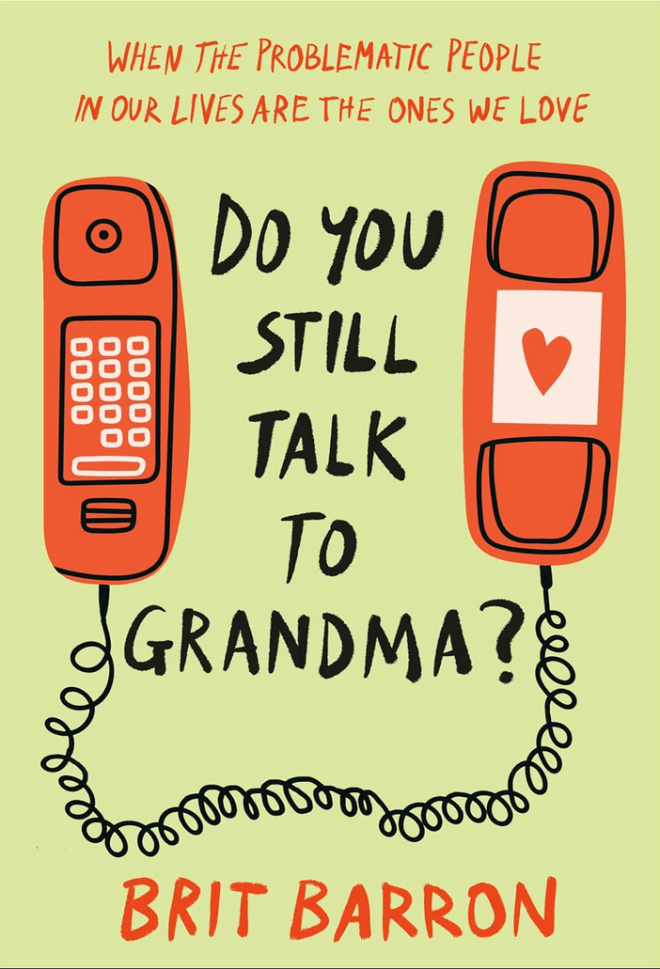
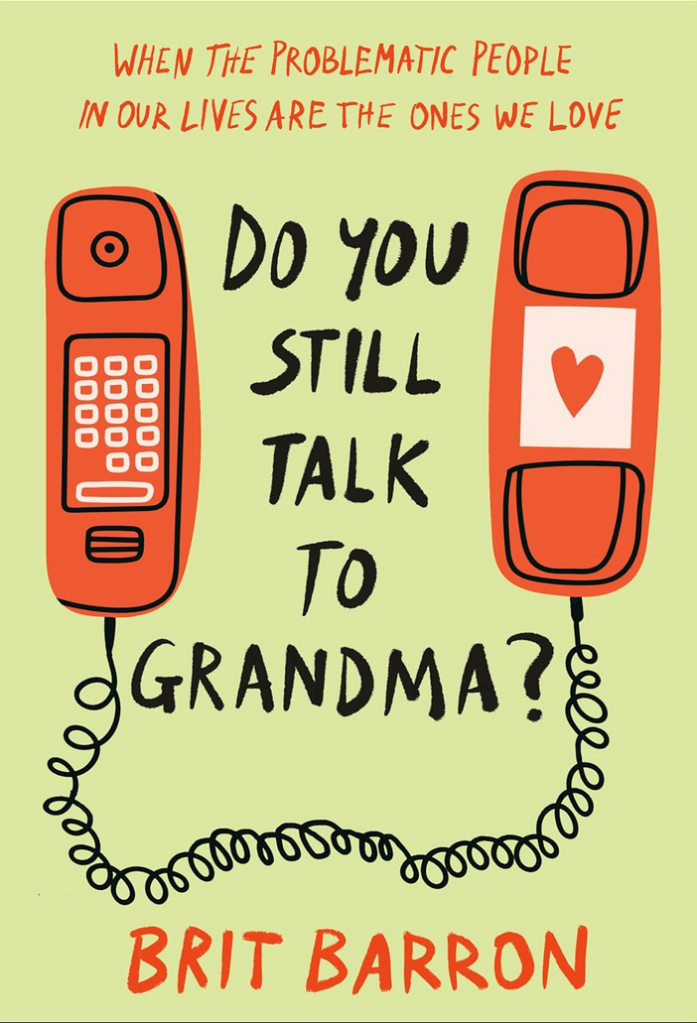
In her book, Do You Still Talk To Grandma?, Barron discusses how she has taken every experience in her life – the good, the bad, the mistakes, and the triumphs – to build boundaries with empathy and compassion in order to secure a safer, more tolerant world. And yes, that includes building and maintaining relationships with those who seemingly oppose her.
“There are lots of things that I used to believe that make me cringe now. I have changed, and evolved and grown.”
Brit Barron’s book is relatively short – 160 pages, 8 chapters – and there were so many key points in each chapter that I wanted to expand my thoughts. But as I started to write out my bullet points from each chapter I realized my review might end up being longer than the book itself. This interpretation is entirely my own and I STRONGLY encourage you to pick up a copy so you can draw your own conclusions.
Brit educates us on things like “Internet Brain” and the algorithms that feed us tidbits of information that make it seem like we have the whole picture. We’ve all fallen victim to headline shock and making a snap decision about how we feel about this or that topic. Plus with the world coming to an end every other week we feel like we have to choose “right” even if it means without all the facts.
Along with Internet Brain we develop Progressive Amnesia – a phenomenon that happens when we feel radicalized about something. Suddenly we have strong opinions and no tolerance for ignorance – even though we just learned this information yesterday. We forget what our perspective and opinions were before we were faced with this new information, sacrificing our empathy and compassion for who we used to be. Instead of facing our own shame, we push it onto others.
Then she dives into cancel culture and how this is the ultimate progressive amnesia. Brit emphasizes that racist and violent is not tolerated, but there is also a difference between offense and harm. Offense usually comes from a passive lack of understanding – the person can be educated and correct the behavior. But harm is active. She gives the example of Harvey Weinstein vs. the girl who wore a Native American headdress to Coachella. Which one committed an offense which can be rectified, and which one committed harm?
Moving on, Brit talks about making mistakes and how it’s not just a thing that happens to us, but something we participate in. We need to learn to recognize our own mistakes so we can hold space for others. Again -empathy, compassion, and learning from our past selves. We need accountability and boundaries and consequences, but if we cut off everyone that offended us we would be in total isolation. Do we truly want accountability or do we want retaliation? Do the mistakes of our past still define us once we have reconciled and made serious changes for the better? Can we have understanding for those who think and behave the same way we once did?
“How can we sit in the murky waters of what it means to allow room for transformation after consequences? How can we hold back punishment? What empathy needs to be extended to ourselves so it can also be extended to others?” -Brit Barron
The final two chapters are probably the most important, but would mean nothing if you skipped right to the end. In Chapter 7, Britt talks about the importance of setting boundaries. Having empathy and compassion is just one step, but you need to be firm in your limits so you don’t lose yourself. She gives us a brief lesson of racial identity theory and how it’s a factor that divides white people and BIPOC people. I’m not going to get too into it because I’ll butcher the whole thing and probably confuse everyone. But basically white people and BIPOC people develop our identities differently. Being aware of why we have unconscious (or conscious in some cases) biases typically starts here in early development. Whatever stage we fall on in our identity development helps outline our boundaries – what we’re willing and not willing to put up with. And just like grief (because that is also a huge obstacle to overcome) the stages are not linear and you could bounce around until you reach acceptance and actualization.
Finally, we talk about moving forward – both individually and collectively. Find your people, the ones who support you, challenge you, and lift you up. Britt says: “Find a way to disagree with someone and still hold them close” – we struggle with being radical enough to make change while still loving and caring for those who’s thoughts and perspectives feel like they are harming us. If we talked to each other we might find we have more in common than we thought but the internet and constant stream of opinions and backlash force us to choose a side. “Do your work,” she says, and focus on taking the next right step.
As she mentions point blank, if you looked at the title and thought, “This isn’t for me,” then you’re absolutely right. This book is not for those who immediately cut someone off because they voted the opposite or does not support the same causes. This book is also not for those who think this is liberal dribble. No, Britt eloquently explains that this is for the mass majority of us who tend to fall in the middle. We are not polarized, but feel like we are constantly forced to choose a side and stay there.
Especially in this time of extreme political divide, what I took away from Brit Barron’s book is that it is crucial to maintain relationships with the ones you love while still holding your boundaries. Have compassion for those who come from a different walk of life and love thy neighbor.
“And don’t talk to ICE.” – That one is from me.
 Holly Writes and Reviews